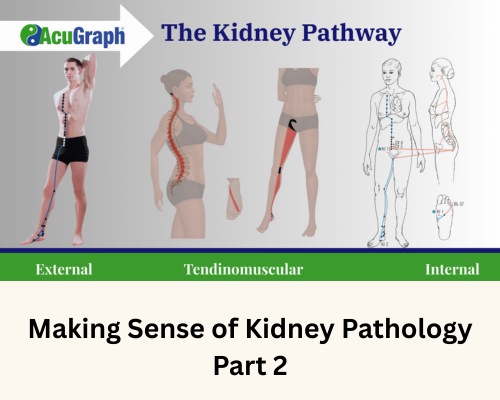
In Part 1 of this series, we explored how to make Kidney pathology simple and relatable for your 55+ community.
If you missed it, the theme was:
“I’m too young to feel this old!”
If you haven’t read Part 1 yet, click HERE—it will make everything we discuss today even more enlightening.
Now let’s shift gears.
Today, I want to talk about a surprising (and honestly, concerning) trend I’m seeing more and more:
Younger patients showing Kidney imbalances—long before the natural aging process should begin.
And it’s not subtle.
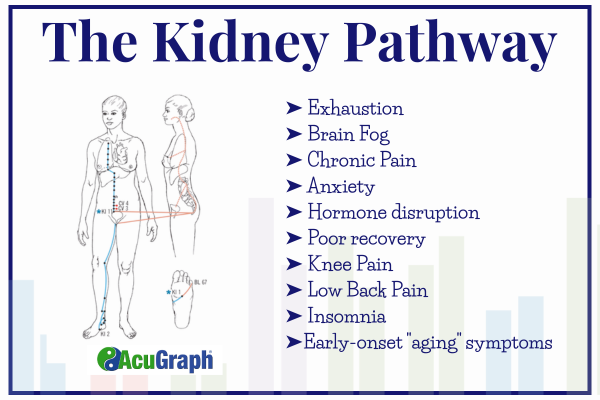
Patients in their 20s, 30s, and 40s are walking into my clinic with:
-
Exhaustion
-
Brain fog
-
Chronic pain
-
Anxiety
-
Hormone disruption
-
Poor recovery
-
Knee pain
-
Low back pain
-
Insomnia
-
Early-onset “aging” symptoms
They sit across from me and say:
“I don’t know what’s wrong. I have no energy. I’m not functioning well. I can’t seem to get better.”
So I graph them to get a deeper look.
The Kidney pathway reveals the underlying story.
I look them in the eye and say:
“You are WAY too young to feel this old.”
And it’s exactly what they needed to hear.
So what’s happening?
Why are younger patients showing the same patterns we typically expect in our 55+ community?
Over the years, I’ve noticed a very clear pattern developing—and honestly, I wouldn’t have recognized it without the lens of AcuGraph.
The Energy Cycle View: A Completely Different Lens
This is where graph analysis gets fun.
When we switch to the Energy Cycle view, we stop speaking in theoretical TCM language and start talking about something every patient understands:
Flow.
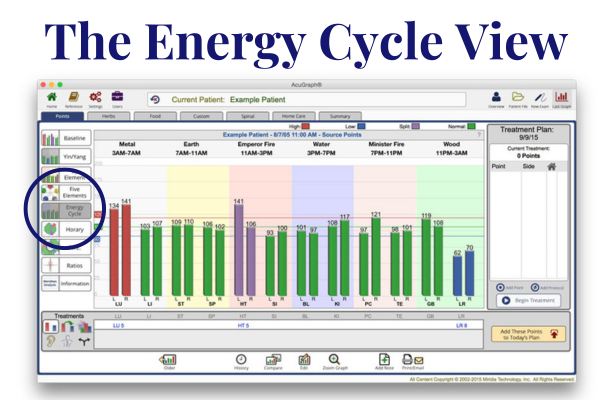
This view is my number one patient communication gem, because:
➤ Flow makes sense to patients.
➤ Flow makes sense to practitioners.
➤ Flow makes sense to anyone who has ever been stuck in traffic.
So let’s break it down.
Think of the pathways like a road map.
Energy moves through the body in a specific order.
One pathway feeds the next…
and then the next.
When everything is open, the “traffic” flows beautifully.
But when one pathway becomes too full, too tight, or too congested?
A traffic jam.
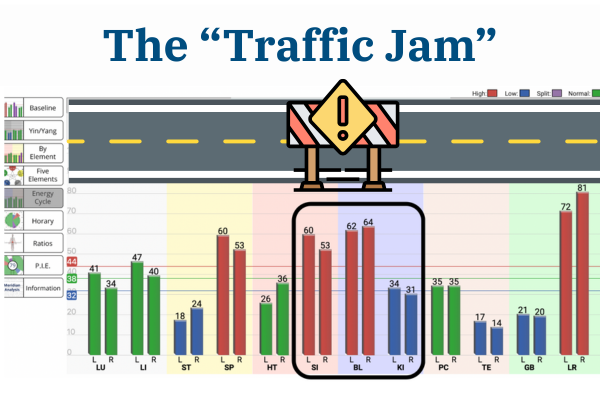
And everything downstream is under-supported.
The BIG Traffic Jam That Stops Flow to the Kidney: SI + UB
In today’s high-stress, overworked, under-rested world, two pathways almost always take the first hit:
➤ The Small Intestine (SI) muscular pathway
➤ The Bladder (UB) muscular pathway
These pathways get tight, blocked, and overloaded from:
-
Constant sympathetic activation
-
Sitting too much
-
Tech neck
-
Shoulder tension from stress
-
Overtraining
-
Lack of sleep
-
Poor boundaries
-
Emotional overload
-
Survival-mode living
Younger patients walk in saying:
👉 “My shoulders are always tight.”
👉 “My upper back is killing me.”
👉 “I’m stressed all the time.”
👉 “I can’t slow down.”
👉 “Everything hurts.”
And guess what?
That SI/UB congestion creates a massive traffic jam in the Energy Cycle.
And what’s downstream?
The Kidney pathway.
So even though the patient is young, their Kidney pathway is:
➤ Underfed
➤ Under-supported
➤ Energetically starving
This Is How Younger Patients Burn Out Their Adrenals
This is the exact mechanism behind the modern epidemic of:
“I’m too young to feel this old.”
Younger patients are living fast-paced lives.
They are: overworking, overcommitting, overthinking, and overstressing.
They carry the weight of the world on their shoulders—literally—and never build their reserves.
This creates SI/UB blockages the Kidney cannot compensate for.
Let me say this clearly:
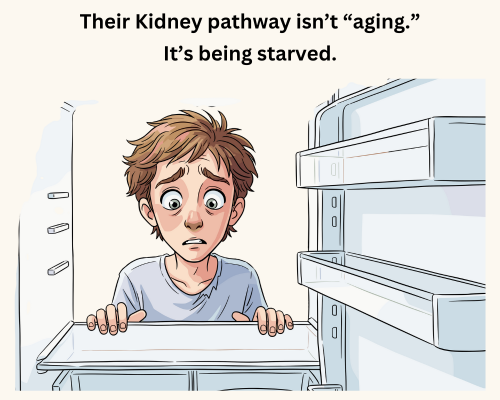
Their Kidney pathway isn’t “aging.”
It’s being starved.
These patients often cannot hear the body’s early whispers.
They only show up when the body is screaming.
-
Chronic pain
-
A weakened immune system
-
Burnout
-
Emotional instability
-
Low libido
-
Fatigue
-
Sleep disruption
When the Kidney is downstream from a traffic jam, it never gets what it needs to stay strong, resilient, and youthful.
The graph will reveal the story every time.
AcuGraph not only reveals the pattern—it opens the door for transformation.
This is what I tell them:
“You are too young to feel this old. I’m going to help your pain… and teach you how to listen to your body.”

The Clinical Gold: How to Build a Treatment Plan That Actually Works
Here’s the key teaching moment for Part 2:
You must address SI and UB muscular tension in conjunction with regulating the Kidney pathway.
If you try to tonify or balance the Kidney pathway without clearing congestion upstream, you’re working with a deficit.
It’s like plugging a phone into a dead outlet.
Nothing changes.
Your treatment plan becomes simple—and incredibly effective:
-
Release the Small Intestine muscular pathway.
-
Release the Urinary Bladder muscular pathway.
-
Strengthen and regulate the Kidney pathway.
✨ This is the magic formula to restore flow through the Energy Cycle. ✨
I love treating the 55+ community, but I equally love teaching a younger generation how to understand their graph—because when they understand, they change their lives.
And AcuGraph?
The best patient communication tool we have.
Hands down.
Healer · Teacher · Mentor
I hope you’ve enjoyed this two-part series and gained a fresh perspective on the Kidney pathway.
I’ve used AcuGraph through every chapter of my career—from new practitioner to seasoned expert. It has shaped how I diagnose, how I communicate, and how I teach.
And now, in this more mature chapter of my professional life, I feel called to do something important:
Teaching YOU how to become more confident, more successful, and more masterful with AcuGraph.
This is the legacy work.
This is where I get to mentor the next generation of acupuncturists.
A Quick Look Ahead… 2026
Just between us—BIG things are coming in 2026.
One big thing…

Opening The AcuGraph Accelerator Program, where we’ll go even deeper into:
✅ Graph analysis
✅ Patient communication
✅ Developing treatment plans
✅ How to get green graphs faster
I cannot wait to share what’s ahead.
Until then—keep using AcuGraph to heal, to teach, and to inspire every patient who sits across from you.
Cheers,
~Dr. Kimberly
