In my last post, I talked about the tremendous advantages of acupuncture technology for evaluation and diagnosis. Modern tools enhance your abilities and can deliver better, more consistent results than traditional methods alone. If you missed it, click here: Link to Part 1: Why Technology-Driven Diagnosis?
Today, I want to take that one step further by talking specifically about treatment. I’m going to cover:
-
Precision Location
-
Correct Polarity
-
Passive vs. Active Stimulation
-
Powering Up
-
The Right Kind of Qi
-
Waveform Matters
Let’s start with the fundamental objection I hear most often. It usually sounds something like this:
“Why can’t I just use needles? They’ve worked for thousands of years.”
Just like in my last post, a little thought puts that objection to rest pretty quickly.
After all, the same argument could be used against almost any modern advancement when someone wants to defend the old, tried-and-true method that has since been improved upon.
Why use a refrigerator instead of an icebox?
Why cook on a stove instead of over an open fire?
Why use a tractor when you could plow a field with oxen?
You get the picture.
Technological advances bring speed, efficiency, consistency, and better results. That much is obvious in nearly every area of life.
So then the real question becomes this:
What is so great about technology when it comes to treatment?
Now we’re getting to the good part.
Because the real issue is not just what results technology can offer, but why it can offer those results. When I teach this material to acupuncturists, I’ve found that understanding why technology works so well is often more convincing than simply promising better outcomes.
So let’s get into it.
1. Precision Location
When you’re working with a system as wonderfully complex and precise as the human energy system, accuracy matters.
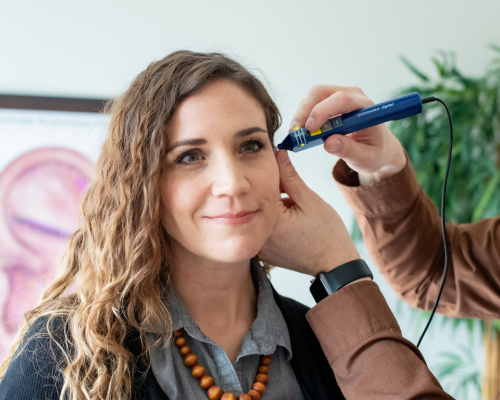
That is especially true with auricular points, which can be extremely small. Electronic tools can help identify the exact treatment location that is likely to have the greatest effect.
That kind of precision is hard to match consistently by feel alone.
2. Correct Polarity
This is something that often gets overlooked.
We tend to assume that one approach fits every situation. But does it?
The entire system is based on balance and opposites: light and dark, hot and cold, dry and damp. So it makes sense to ask: What kind of energy is needed at this point, right now?
That question matters.
And the right technology can help manage that automatically, taking some of the guesswork out of treatment.
3. Passive vs. Active Stimulation
Think about this for a moment: what does an acupuncture needle actually do?
The ancient texts teach that it serves as a point where heavenly energy from above enters the body below to provide energetic correction. That is a beautiful and useful way to think about it.
But a needle placed and left alone is still nothing more than a passive antenna.
It can gather energy to the point, yes — but when you add the right kind of electrical stimulation, you are no longer simply waiting for energy to collect. You are actively delivering it.
That means more can happen in less time.
Electrical stimulation can accomplish far more than passive needling alone, especially when the goal is efficient, targeted energetic change.
4. Powering Up
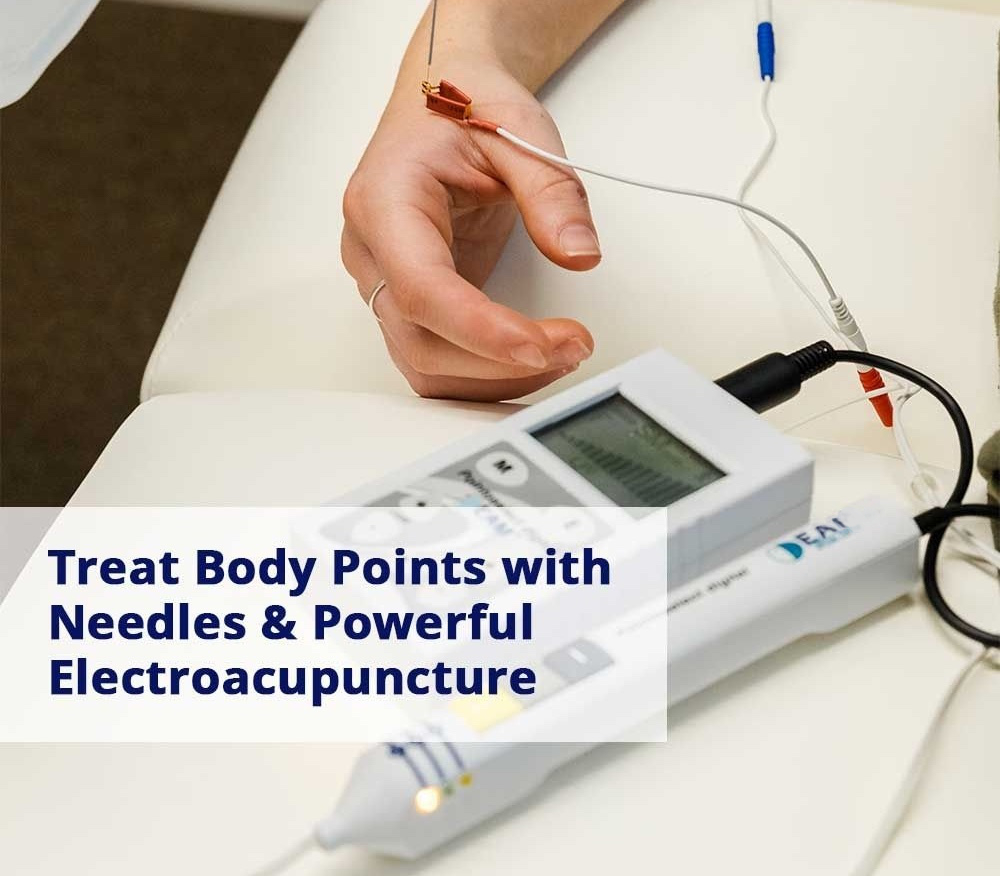
Building on that idea, modern technology gives us another major advantage: the ability to store and concentrate energy in small, portable batteries, then deliver that energy carefully and effectively to the patient’s system.
That is a huge step forward.
Instead of relying only on passive energetic influence, we now have a ready supply of energy that can be delivered rapidly, provided in a precision protocol.
5. The Right Kind of Qi
And speaking of precision, modern tools also allow us to fine-tune the type of energy being delivered.
Frequency, polarity, and waveform all influence how that energy interacts with the patient’s system. In other words, it’s not just about providing more stimulation. It’s about providing the right kind of stimulation.
When the energy being delivered is appropriate for the treatment goal, the body can put it to use more efficiently and with greater effect.
That’s another big win for technology.
6. Waveform Matters
Finally, let’s talk briefly about waveform.
In modern treatment devices, energy is often delivered in a repeated wave pattern — moving one direction, then the other, much like waves on the seashore moving in and out. The way the electricity moves is just as important as the amount or type of electricity being delivered.
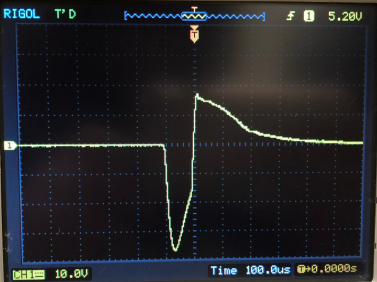
This waveform trace from the Pointoselect Digital, captured on my oscilloscope, shows a sharp downward stroke, followed immediately by a sharp upward movement, and then a gradual return to baseline.
That sharp initial stroke provides the energetic “punch” that helps move Qi into the system. The gradual recovery helps balance that movement so the effect does not become too one-sided.
If both sides of the wave were equally gradual, the treatment would lose effectiveness. If the wave were too aggressive in one direction, it could create imbalance.
The beauty of a well-designed waveform is that it supports both movement and balance while delivering beneficial Qi into the system.
Another win for technology.
Conclusion
We owe a great debt of gratitude to those who came before us in this medicine.
For thousands of years, they developed and preserved the underlying truths that make healing and change possible. One of the best ways we can honor that legacy is by building on their foundation with the tools now available to us — tools they could only have dreamed of.
Our medicine has been around for thousands of years. But only in the smallest fraction of that time have we had the ability to combine timeless principles with modern precision.
Used wisely, the best tools do not replace the medicine.
They honor it.
